Social Media Trends
This template covers why social media matters and what trends are popular today. It is essential for content creators and marketing teams to keep up with the latest social media trends.
1. Social Media Trends
2. Agenda
3. Why Social Media Trends Matter
4. Key Changes in User Behavior
5. Trend 1: Short-Form Video Dominance
6. Trend 2: Creator Economy & Micro-Influencers
7. Trend 3: Social Commerce & In-App Purchase
8. Trend 4: AI-Driven Content Creation
9. Algorithm & Distribution Trends
10. Platform-Specific Differences
11. What This Means for Brands
12. Action Plan & Next Steps
Swipe to see more slides
Social Media Trends Slides Explained
The goal of this presentation is to show how current social media trends impact and align actionable plans for brands. Social media trends change fast, and the trends sometimes depend on the users' behavior or interest. Understanding and trying to apply them into a real-life action plan is more important than just simply getting the idea.
By using this template you can look through social media trends and apply them to practice. Changes in technology and user behavior create new trends every moment. Try to grasp user characteristics and combine them with trends to embed them into your business.
Title Slide
“What is the main subject of the presentation?
”
Title Slide
What is the main subject of the presentation? Use one brief sentence that can summarize your message.
Agenda
“Build the framework of the presentation and order it according to the storyline.
”
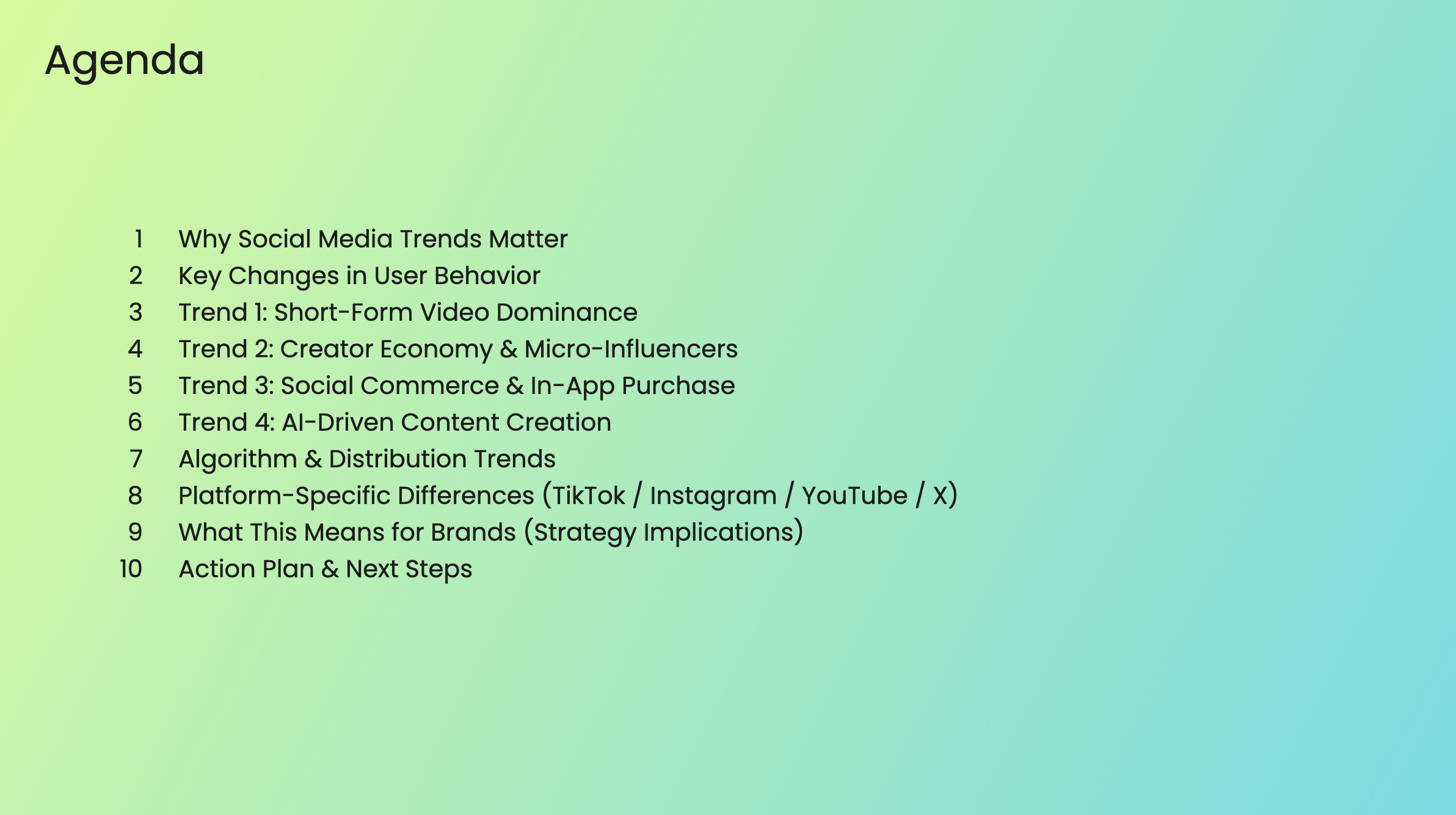
Agenda
Build the framework of the presentation and order it according to the storyline. A well-structured outline helps audiences to understand your goal.
Main Content
“Social media trends are not just a trend, they are a strategy for content.
”
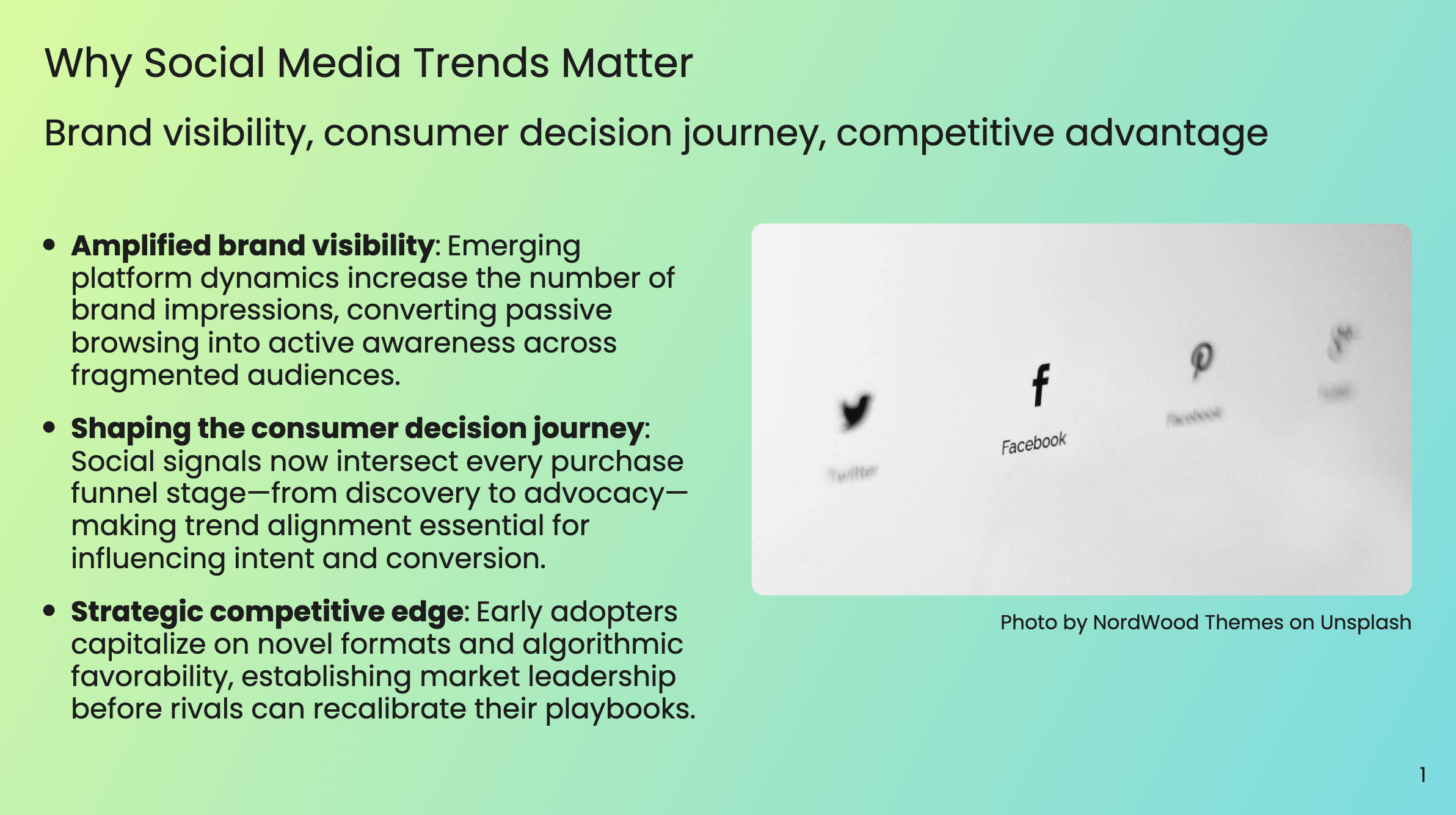
Why Social Media Trends Matter
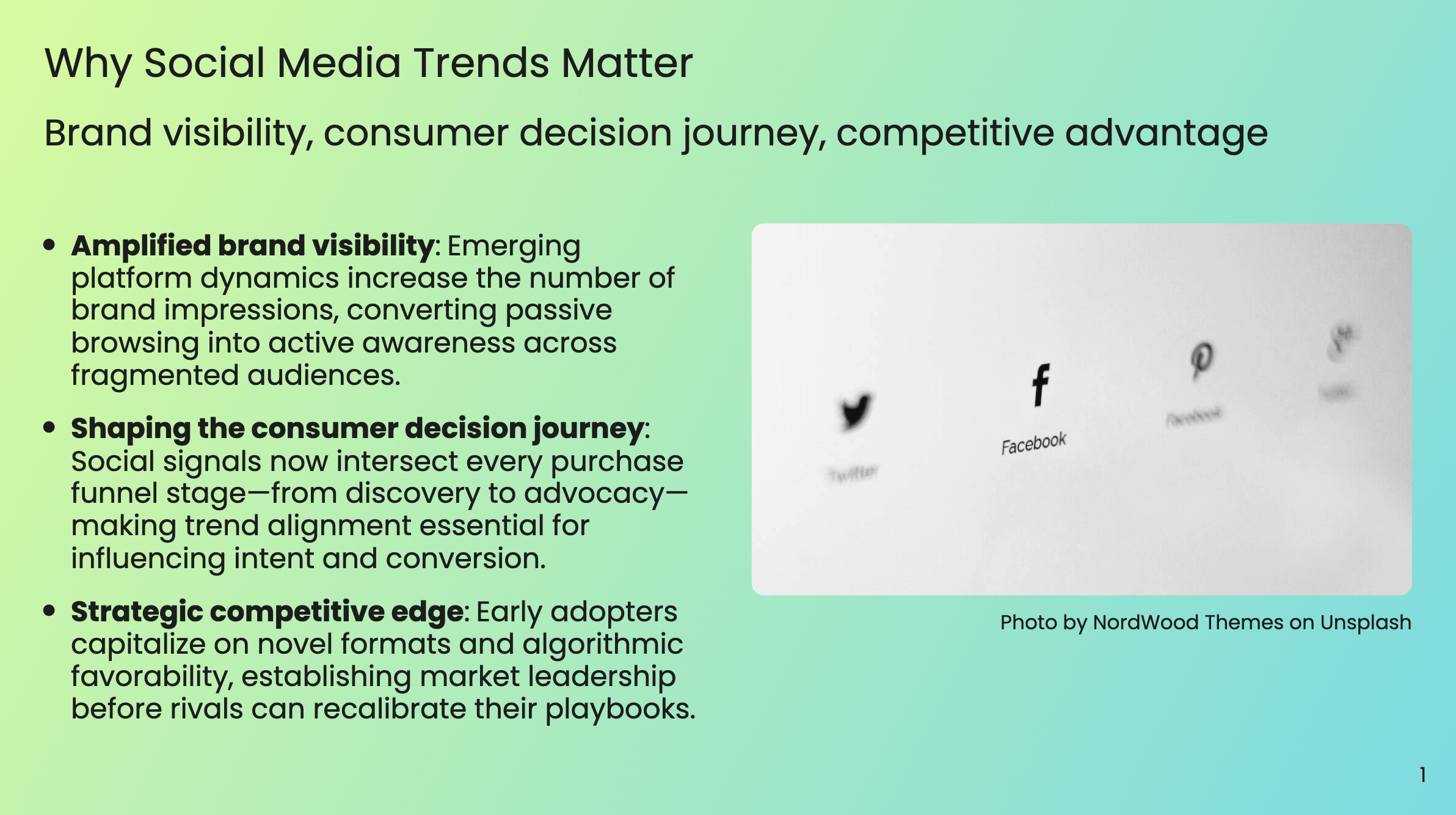
Social media trends are not just a trend, they are a strategy for content. Trends impact reach, engagement and conversion. It can be a competitive advantage if you could stay on top of the trend that your customer's algorithm keeps recommending in advance.
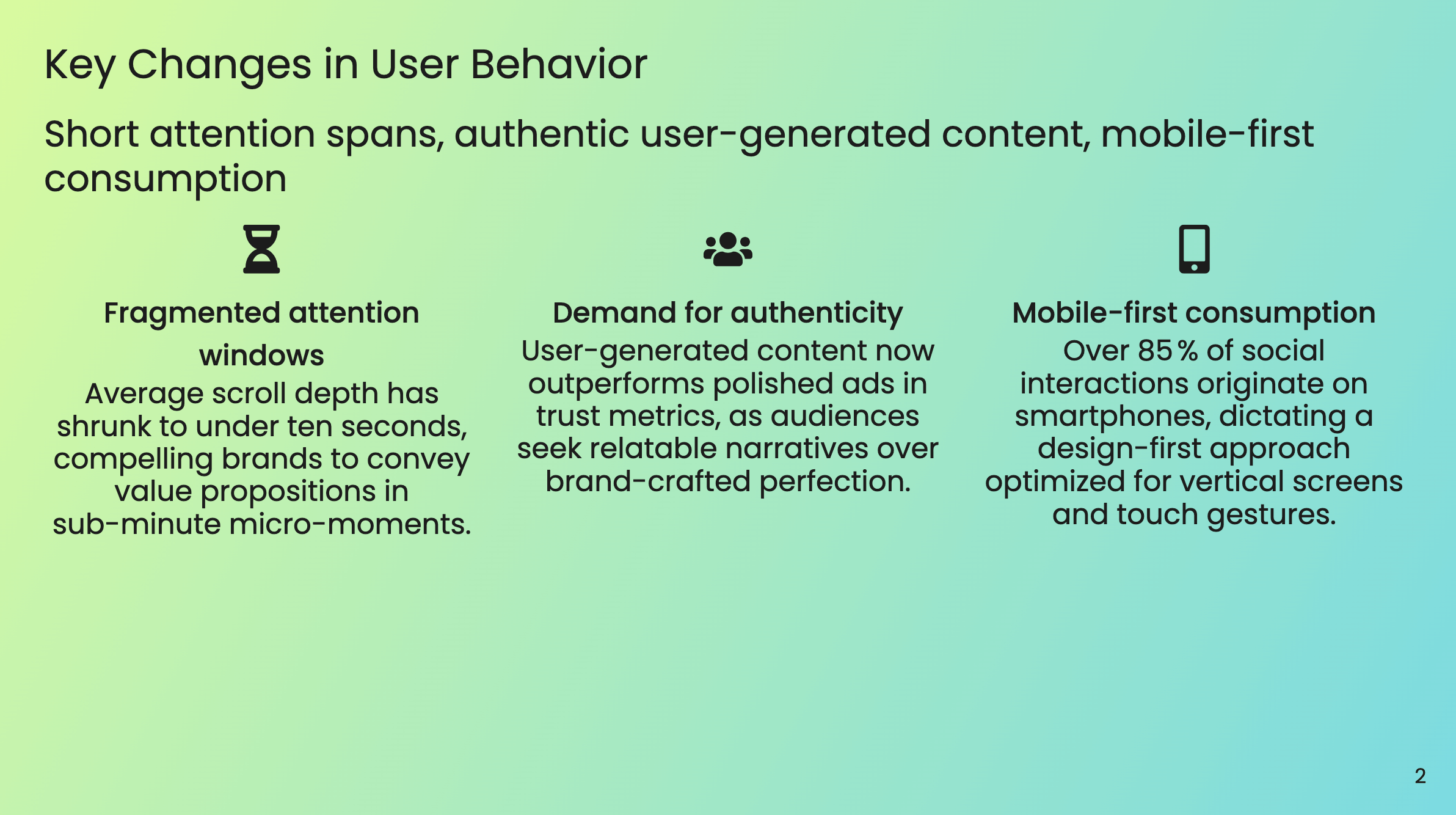
Key Changes in User Behavior
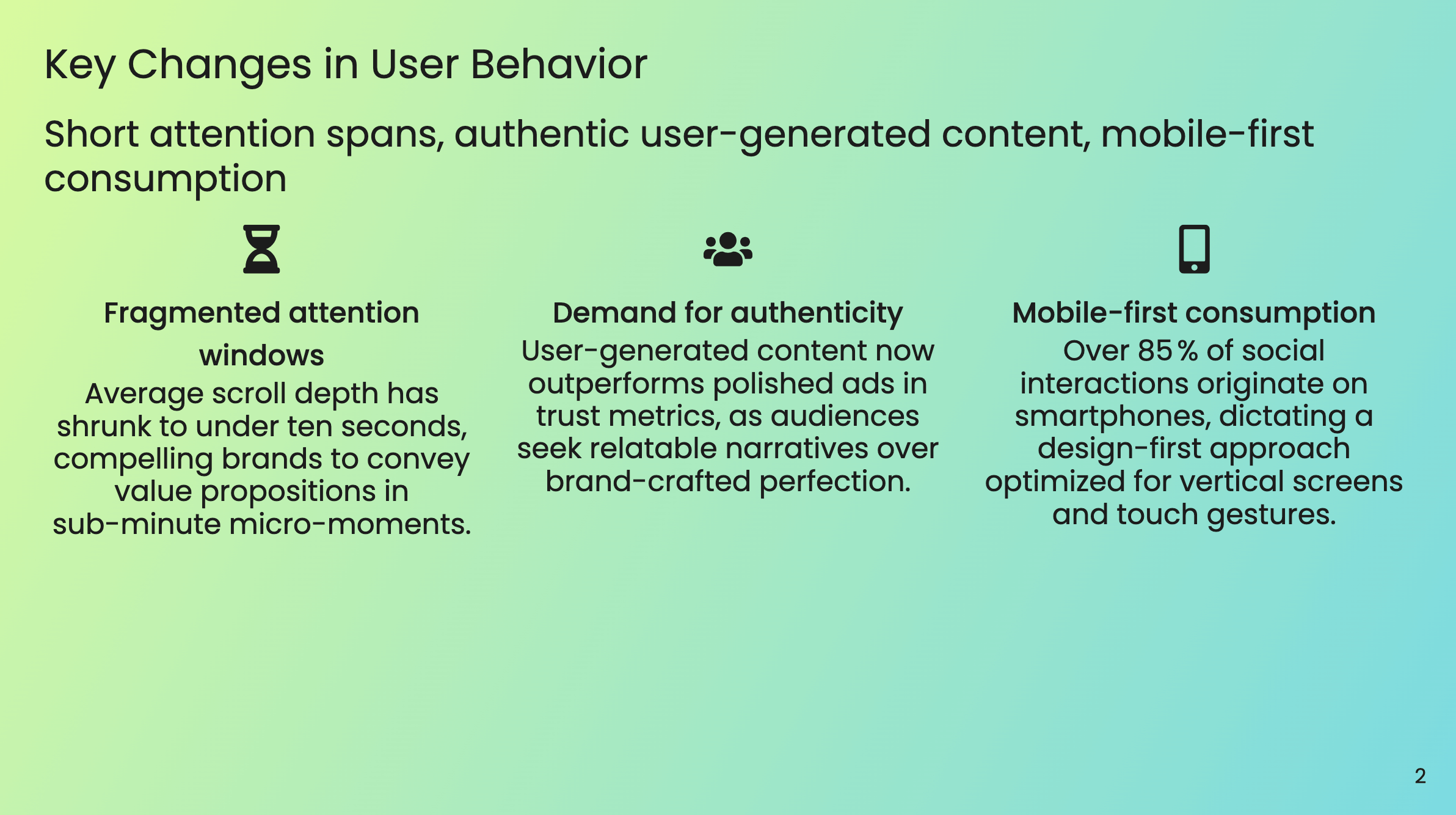
As social media evolves, the user's behavior is evolving too. You should get a clear picture of user behavior and their content consumption pattern. Users are increasingly likely to consume shorter content, using social media as a search engine and reacting to authentic content. In this part, show that social media is not optional and support the claim with a detailed example.
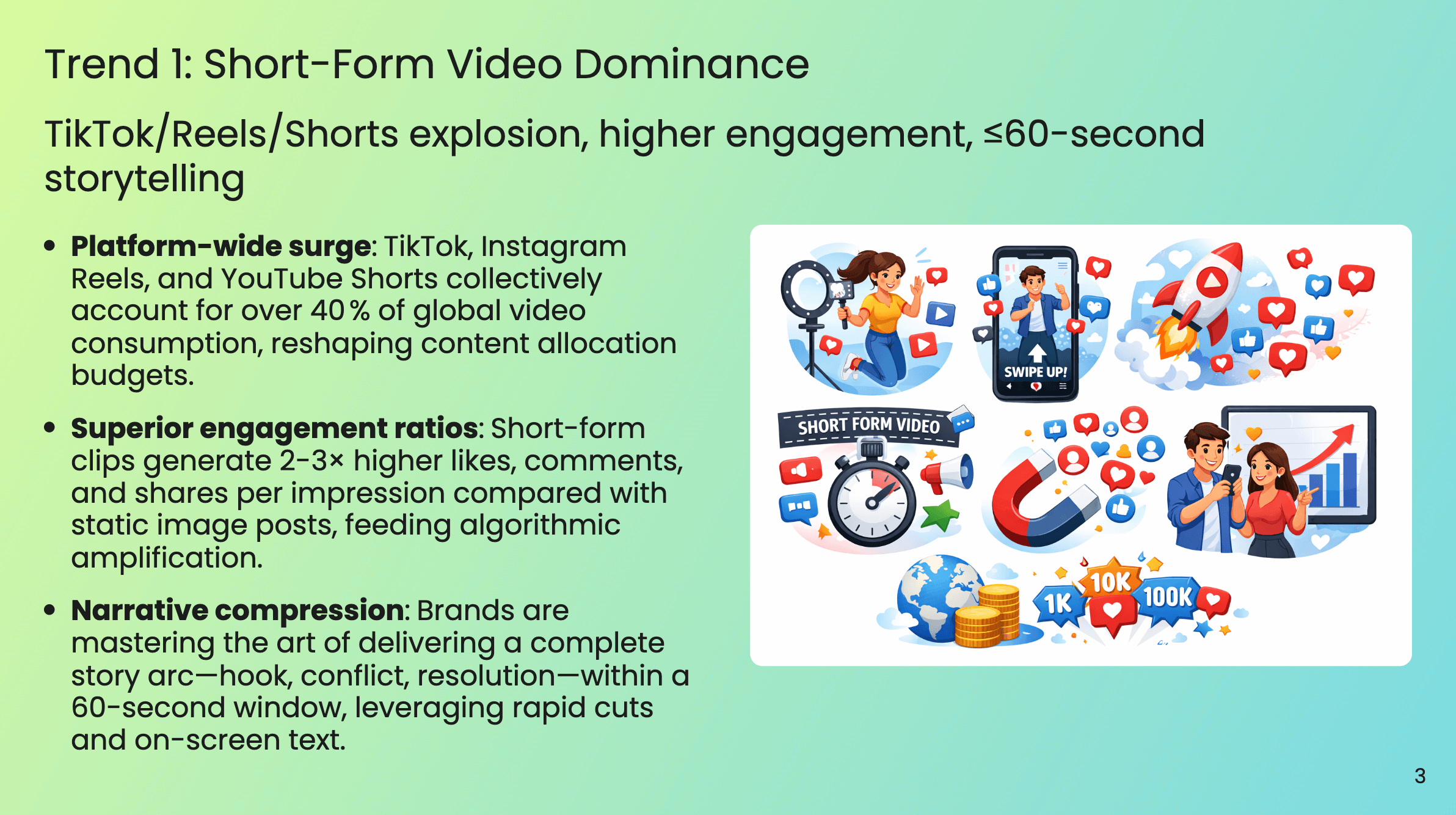
Trend 1: Short-Form Video Dominance
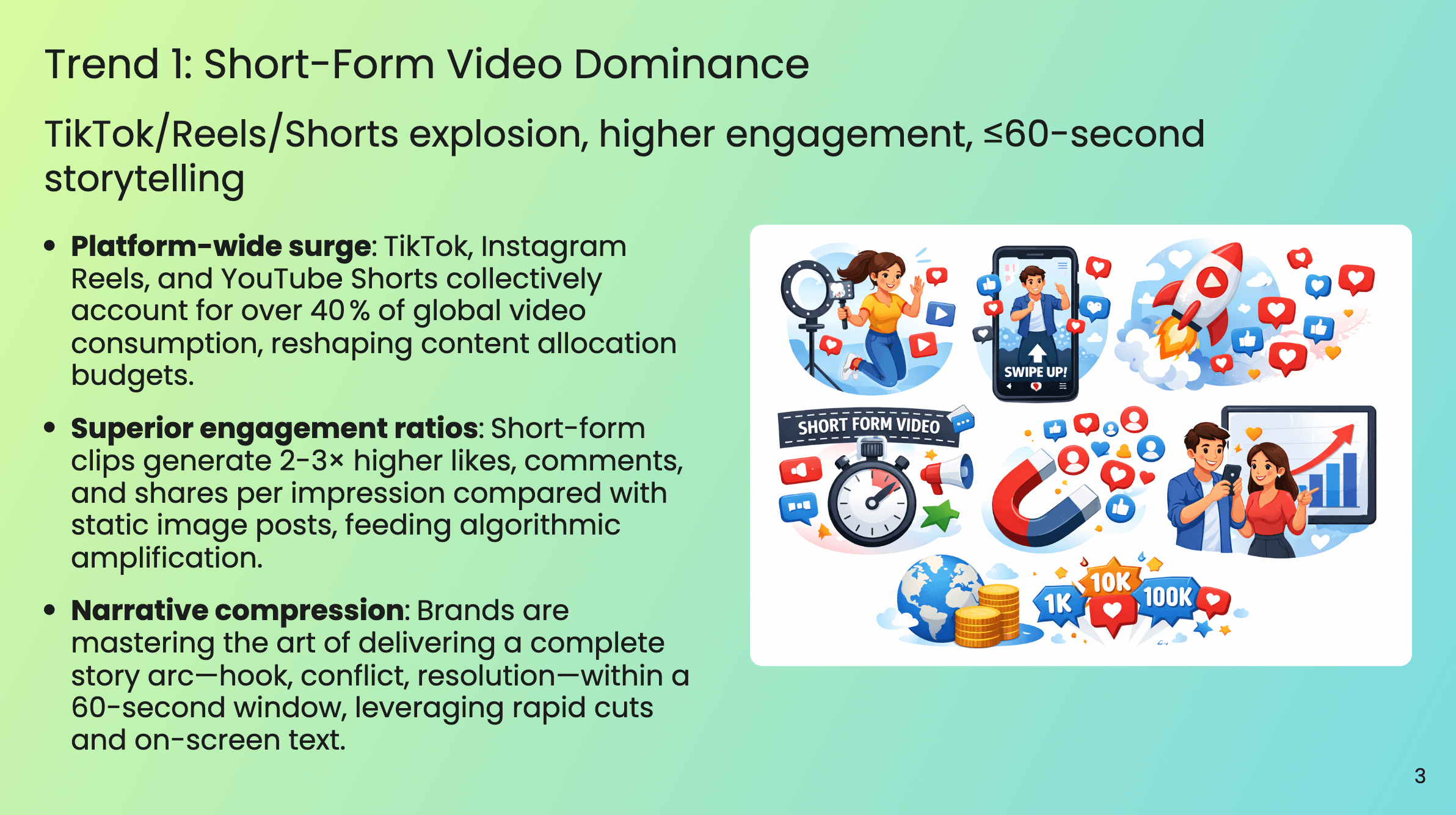
Show how TikTok, Instagram and YouTube short-form video impacts the world and how our life is filled with short-form video. Try to use real-life data to support your opinion. Short-form is no longer a theme — it is a primary format of the social feed.
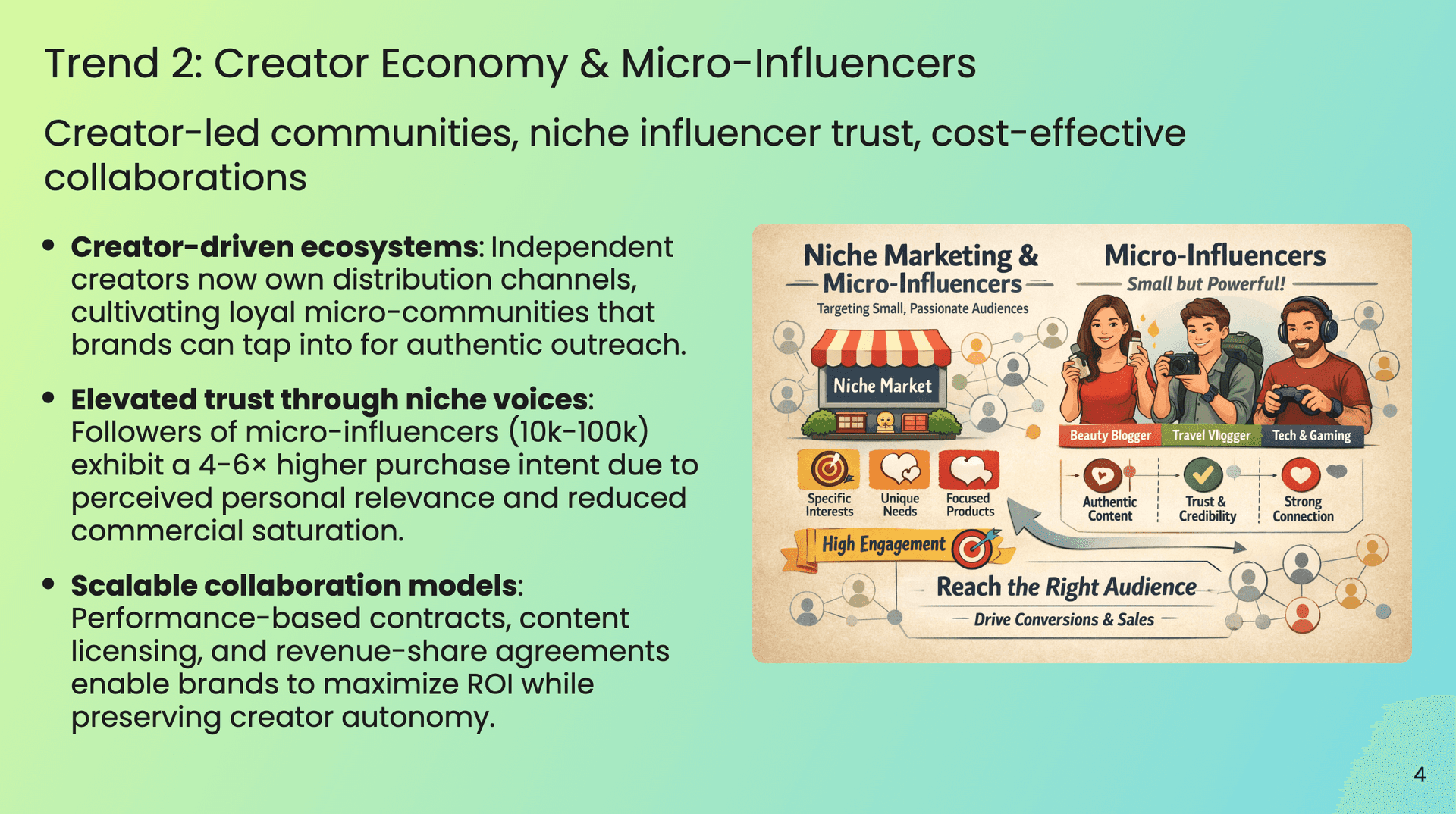
Trend 2: Creator Economy & Micro-Influencers
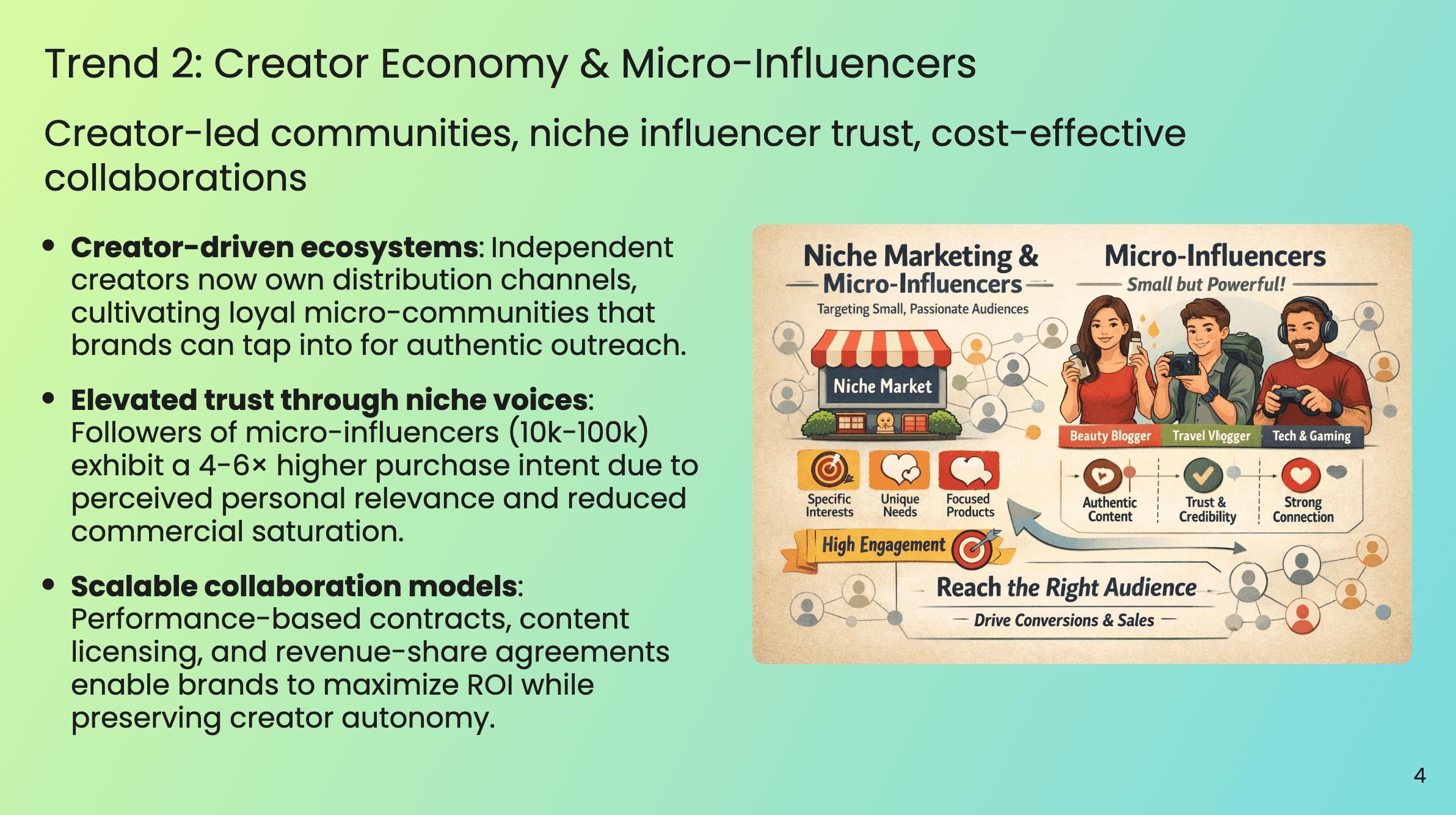
Users tend to communicate with a creator who maintains high relevance or is in a similar situation to them. Micro-influencers have an advantage in personal connection. The performance of the content depends on the engagement, and this goes beyond the amount of followers. Micro-influencers are good at building trust and strong connections so they can deliver more efficiency. For niche marketing, micro-influencers are becoming the trend.
Trend 3: Social Commerce & In-App Purchase
Social media has transformed the e-commerce market and set a trend. A new generation scrolls on their phone and shops simultaneously. Many platforms feature in-app purchasing, and users buy things more cheaply by using creators' group buying. Explain the factors that have evolved social commerce as a revenue engine, such as shopping tags within short-form video and live shopping, and summarize how it has contributed as actual sales.
Trend 4: AI-Driven Content Creation
As AI-generated models could create content, the speed of content creation has increased exponentially. With AI-driven content gaining adoption by creating content that humans could not easily make, it became a trend. If you are a marketer, you should explain types of content created by AI. There are plenty of market cases to reference.
Algorithm & Distribution Trends
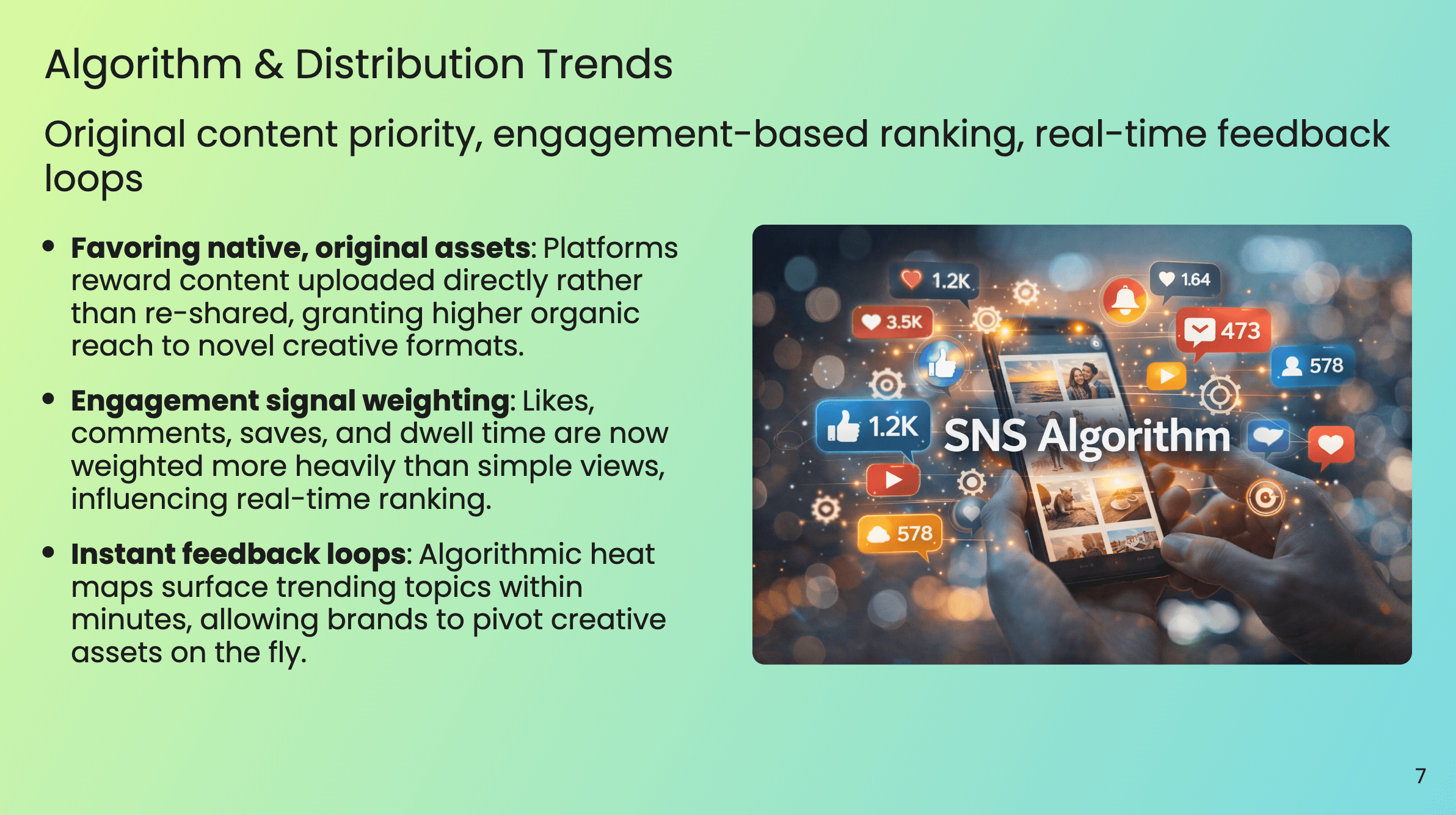
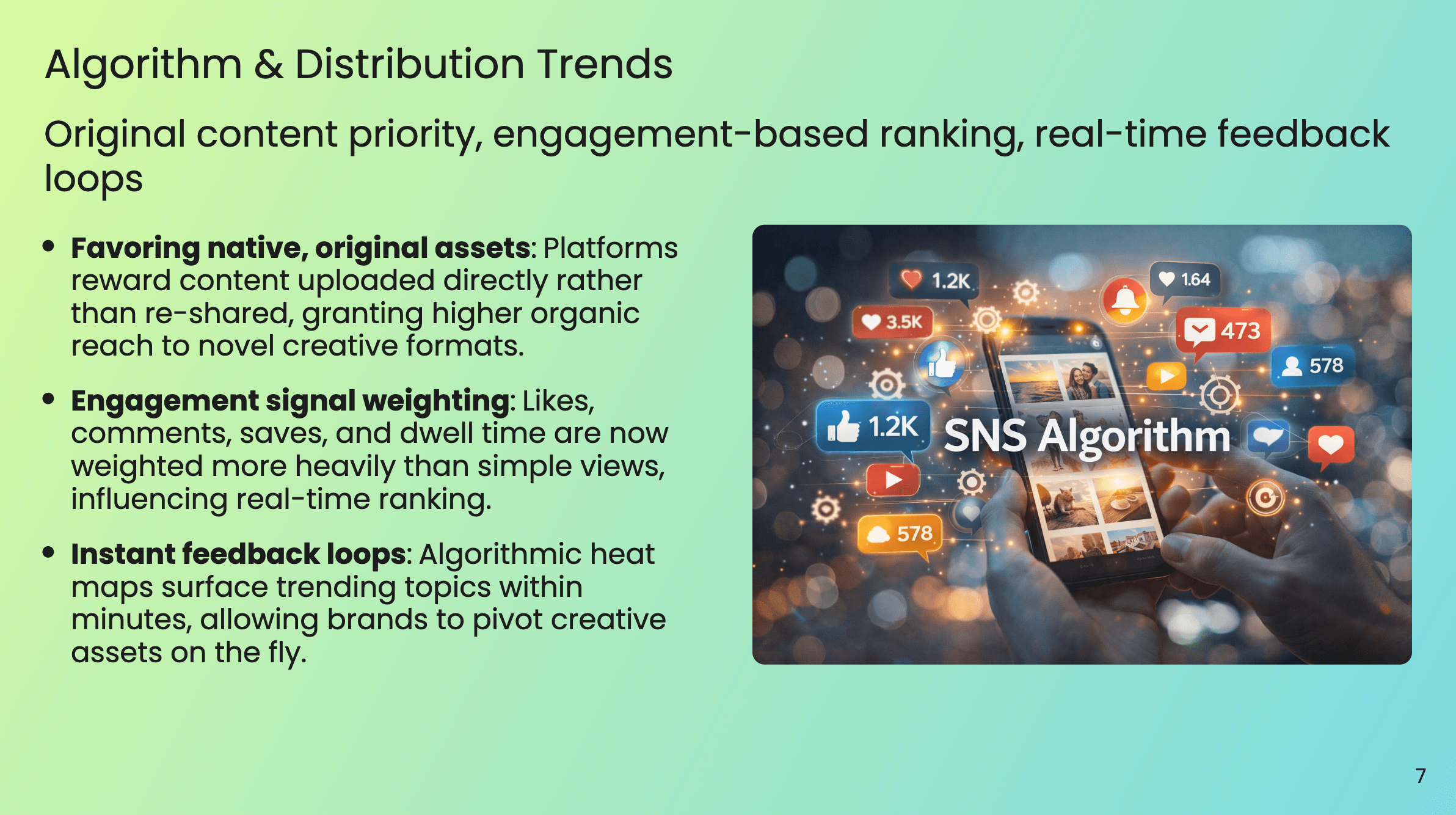
Algorithms are an essential concept you need to know. Social media has its own mechanics of distribution and it affects campaign metrics. You need to establish a strategy to hold a dominant position and boost your content by understanding how the algorithm ranks. Build a deck with information showing that social media values deep engagement signals such as comments, saves and average view duration.
Platform-Specific Differences (TikTok / Instagram / YouTube / X)
We use various social media in our daily life. Each platform presents a unique ecosystem. The distinction also affects user behavior, which leads to content trends. Analyze platforms to identify differences and develop a strategy. Tailored content variations can bring better performance.
What This Means for Brands (Strategy Implications)
In this slide, you need to organize how trends should be reflected in the strategy. Build a brand strategy using previous trends. As you know, trends are fast-changing. It is not enough to just research — you need to apply it to your business.
Final Slide
“An insight without execution could not create impact.
”
Action Plan & Next Steps
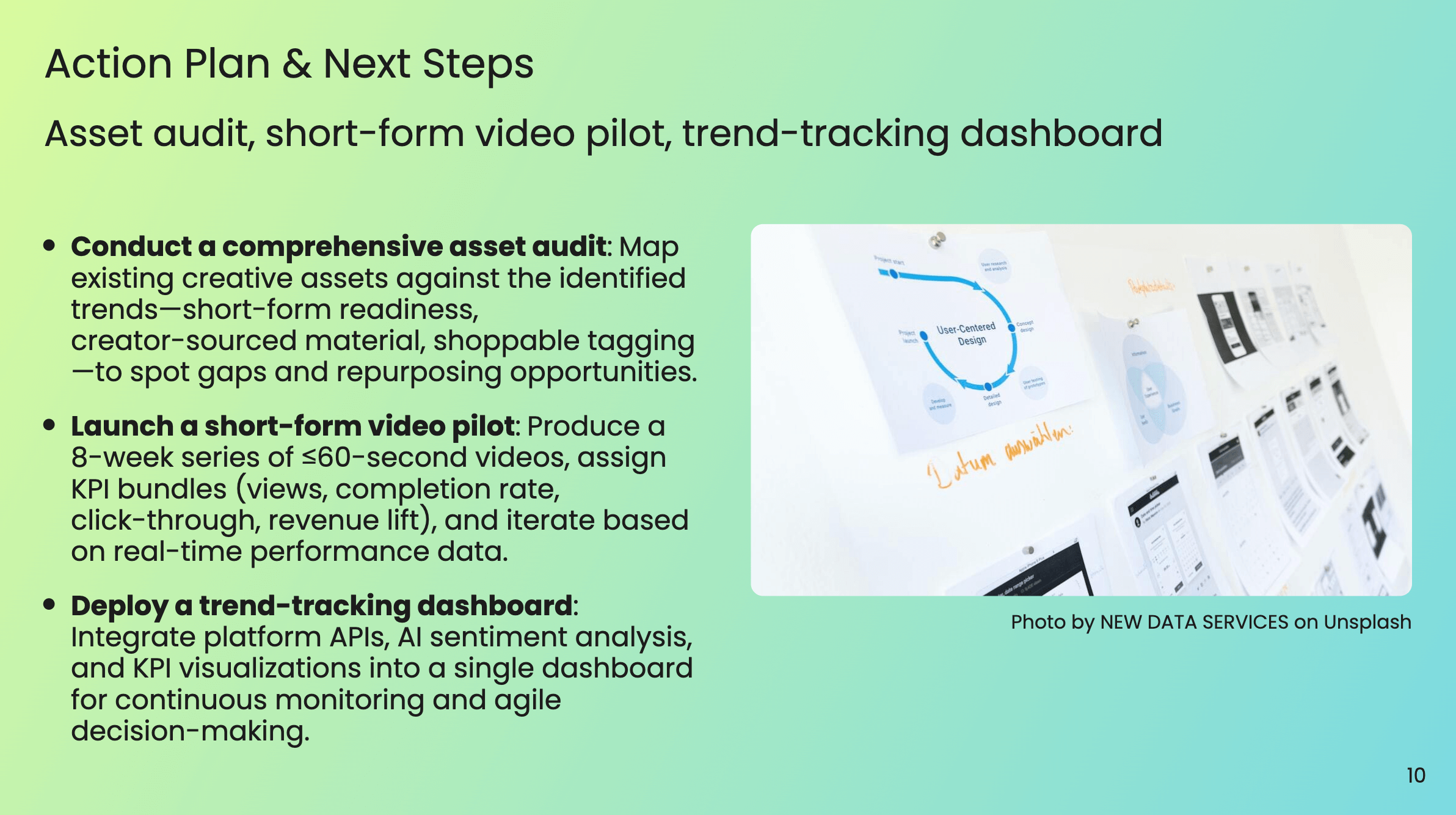
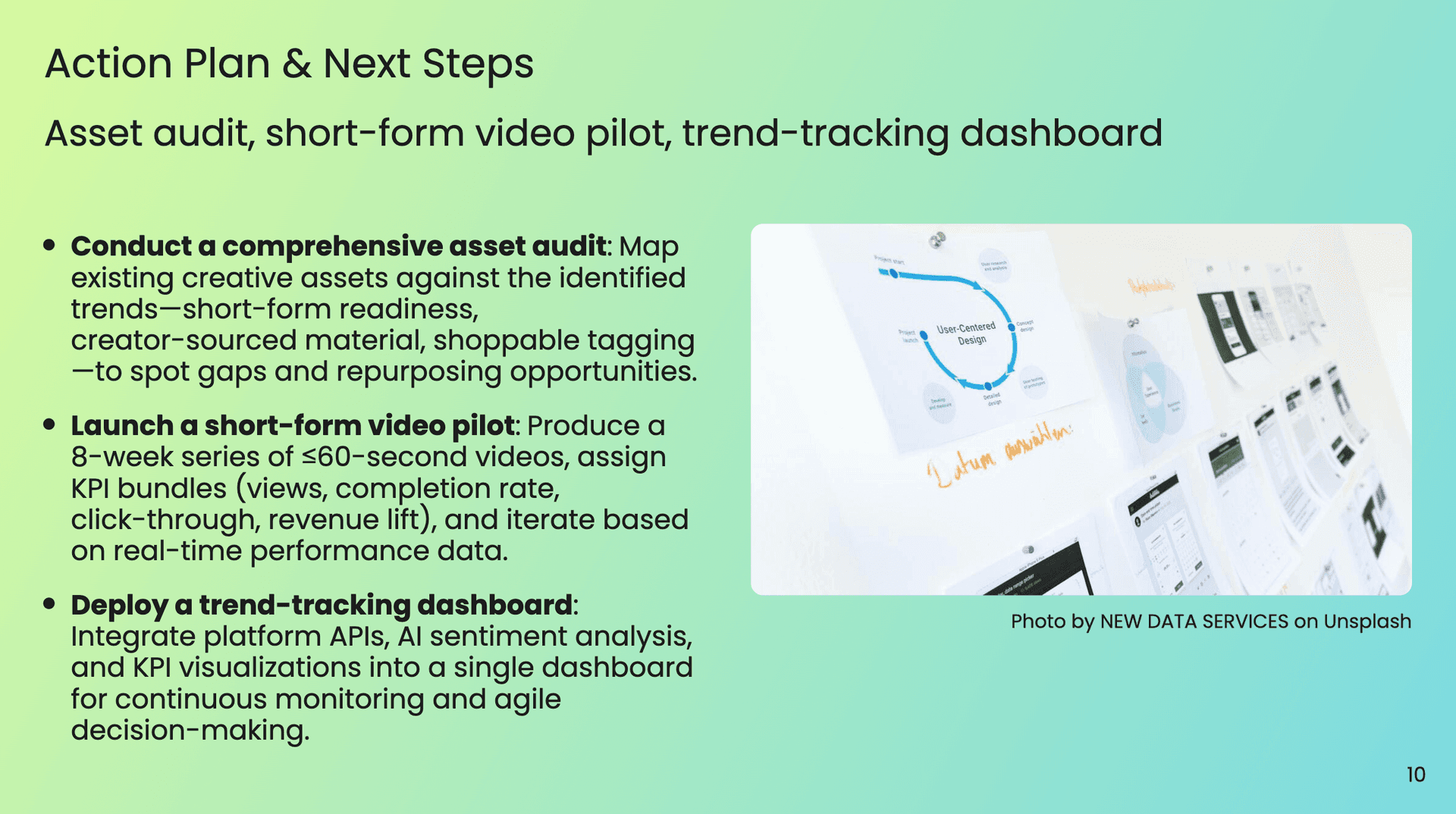
An insight without execution could not create impact. This slide proposes a three-phase action plan. Break the work into stages and set specific tasks for each stage. Define checkpoints to measure success, and track progress continuously and iterate.
Conclusion
By using this template you can look through social media trends and apply them to practice. Changes in technology and user behavior create new trends every moment. Try to grasp user characteristics and combine them with trends.